Global Variables
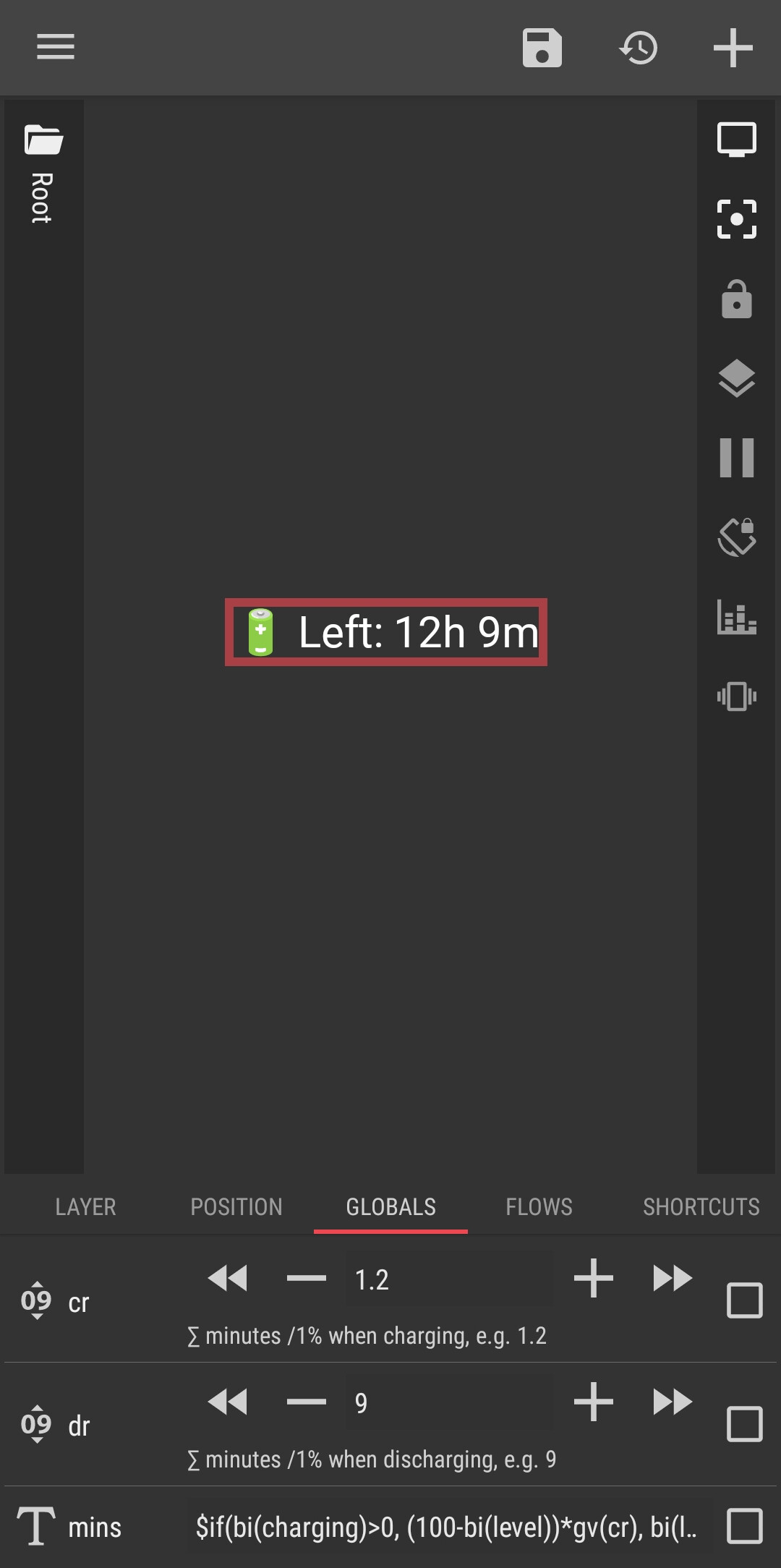
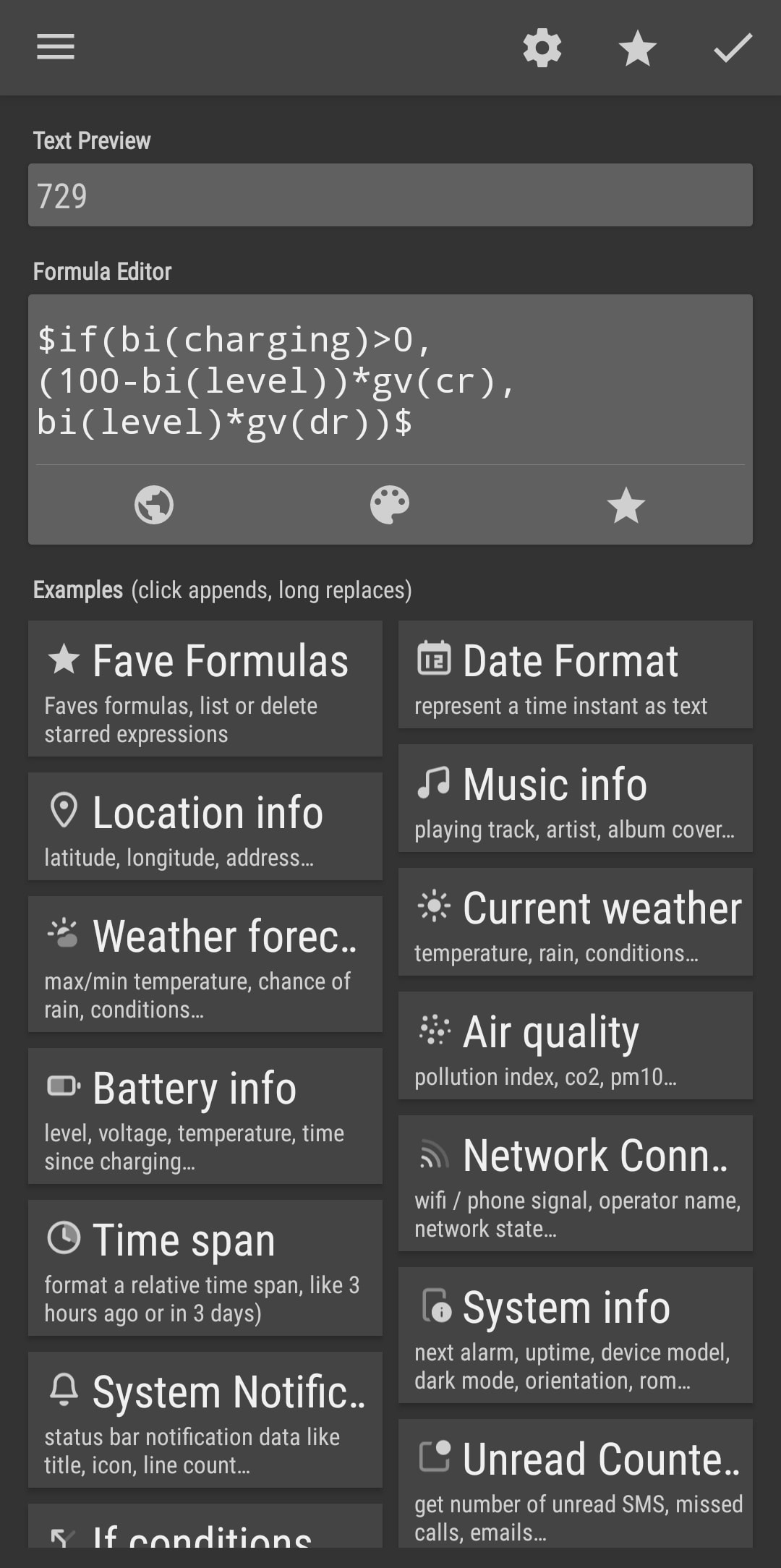
cr: charging rate (type: Number; 1…100) ➞ ∑ minutes per 1% when charging (example: 1.2)dr: discharging rate (type: Number; 1…100) ➞ ∑ minutes per 1% when discharging (example: 9)mins: time calculation (type: Text) ➞
$if(bi(charging)>0, (100-bi(level))*gv(cr)), bi(level)*gv(dr)))$etatext: time display (type: Text) ➞
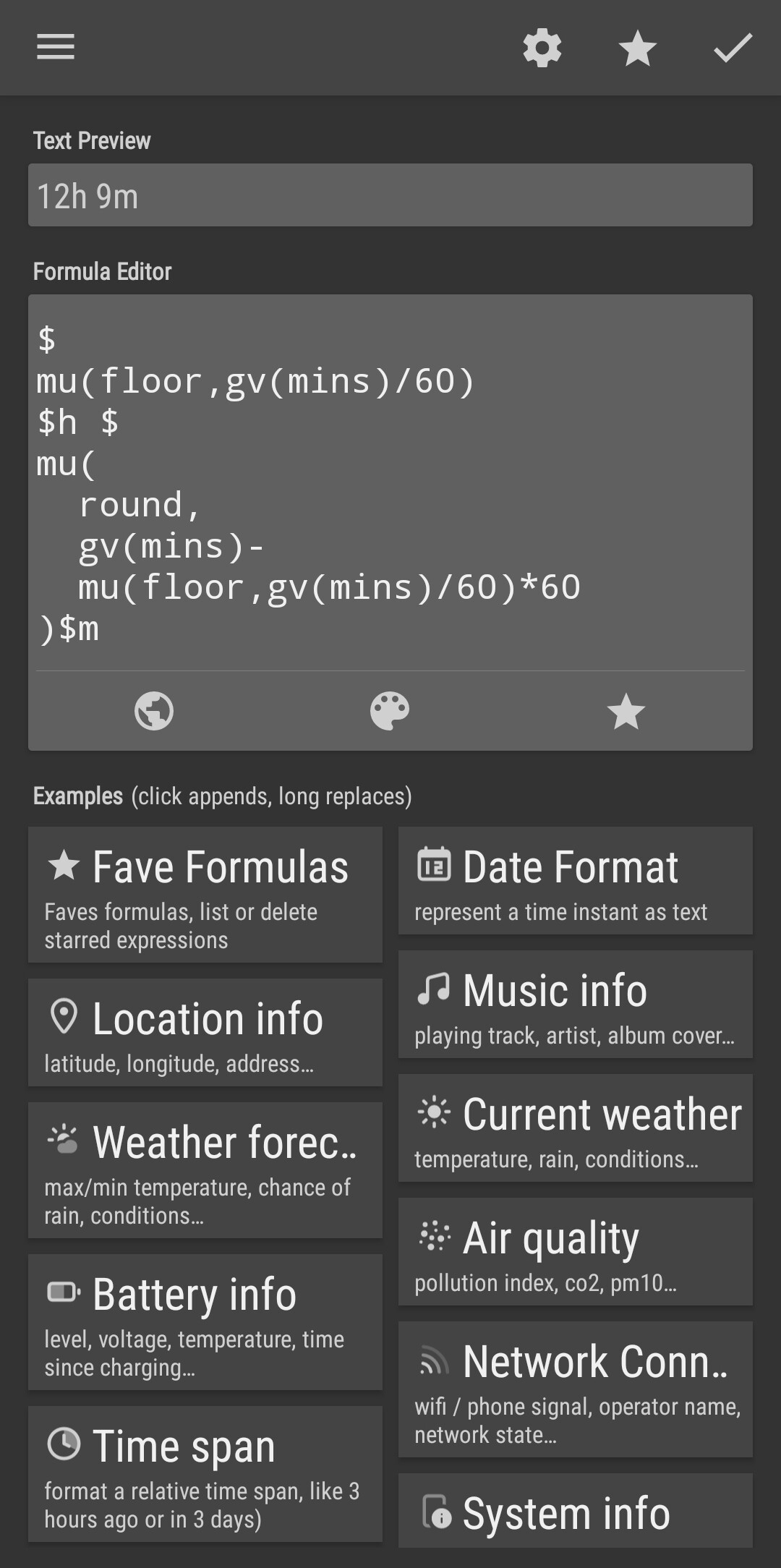
$mu(floor, gv(mins)/60)))$h $mu(round, gv(mins)-mu(floor, gv(mins)/60)*60)$m
Element
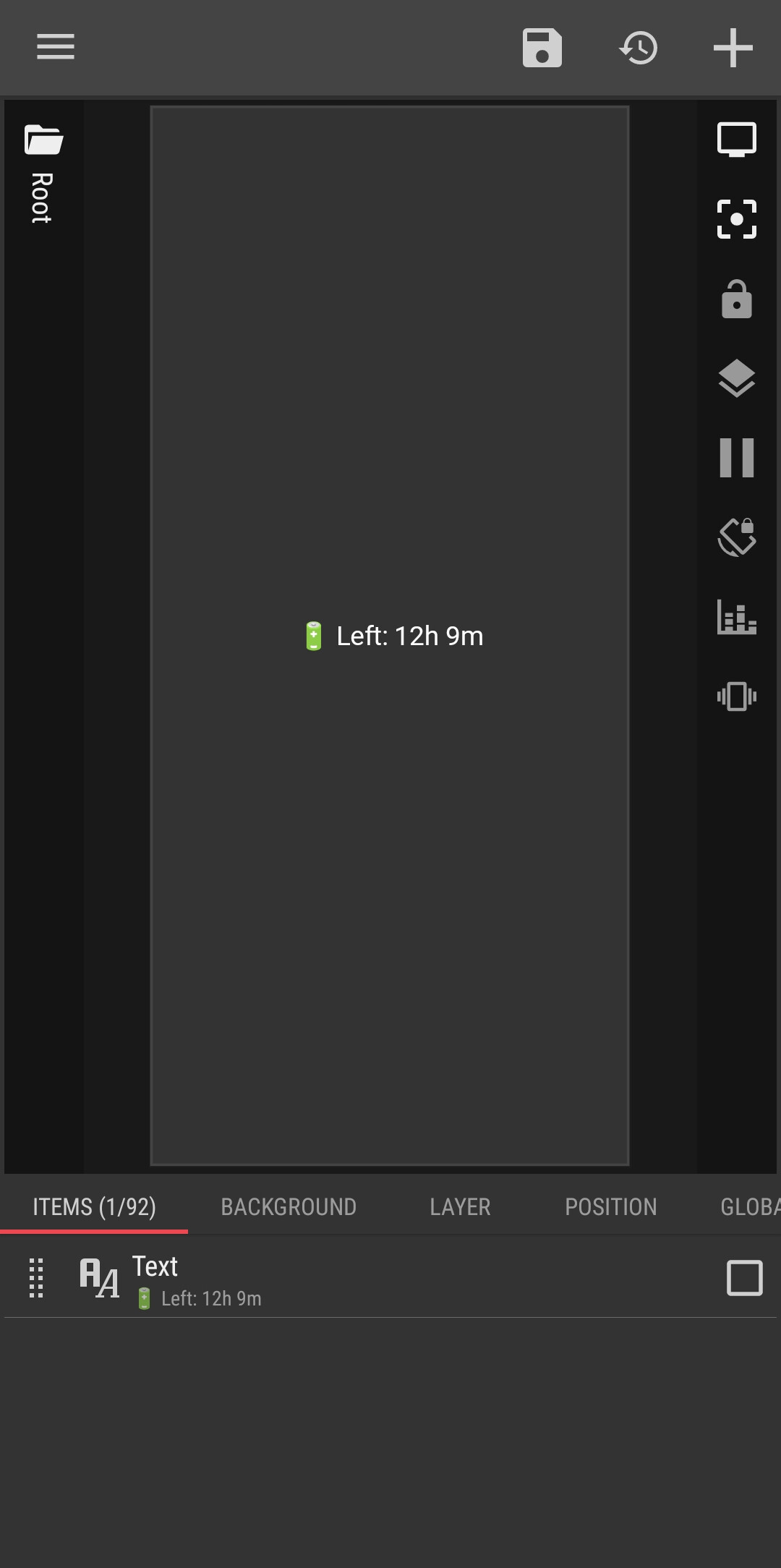
- Text ➞
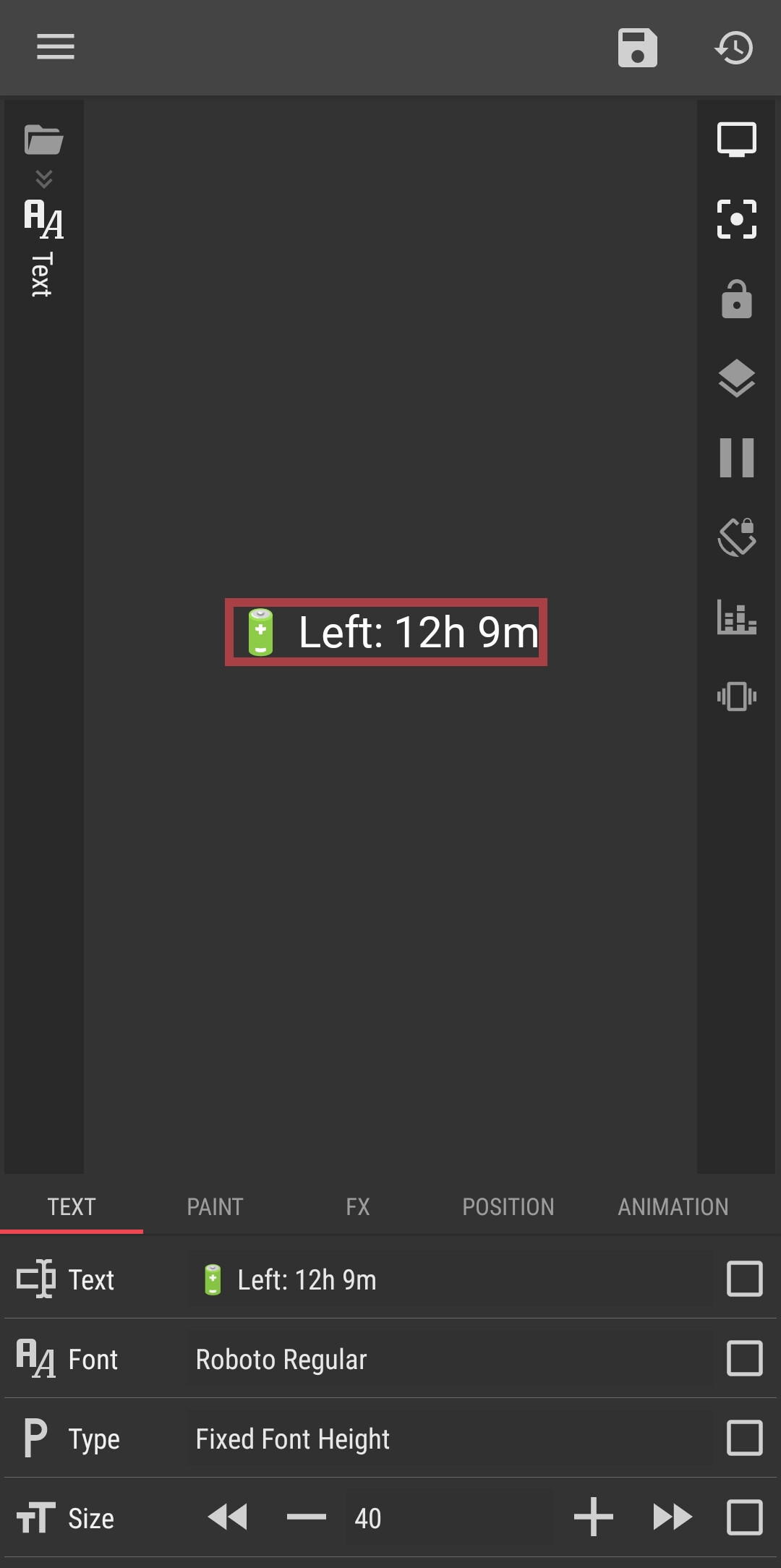
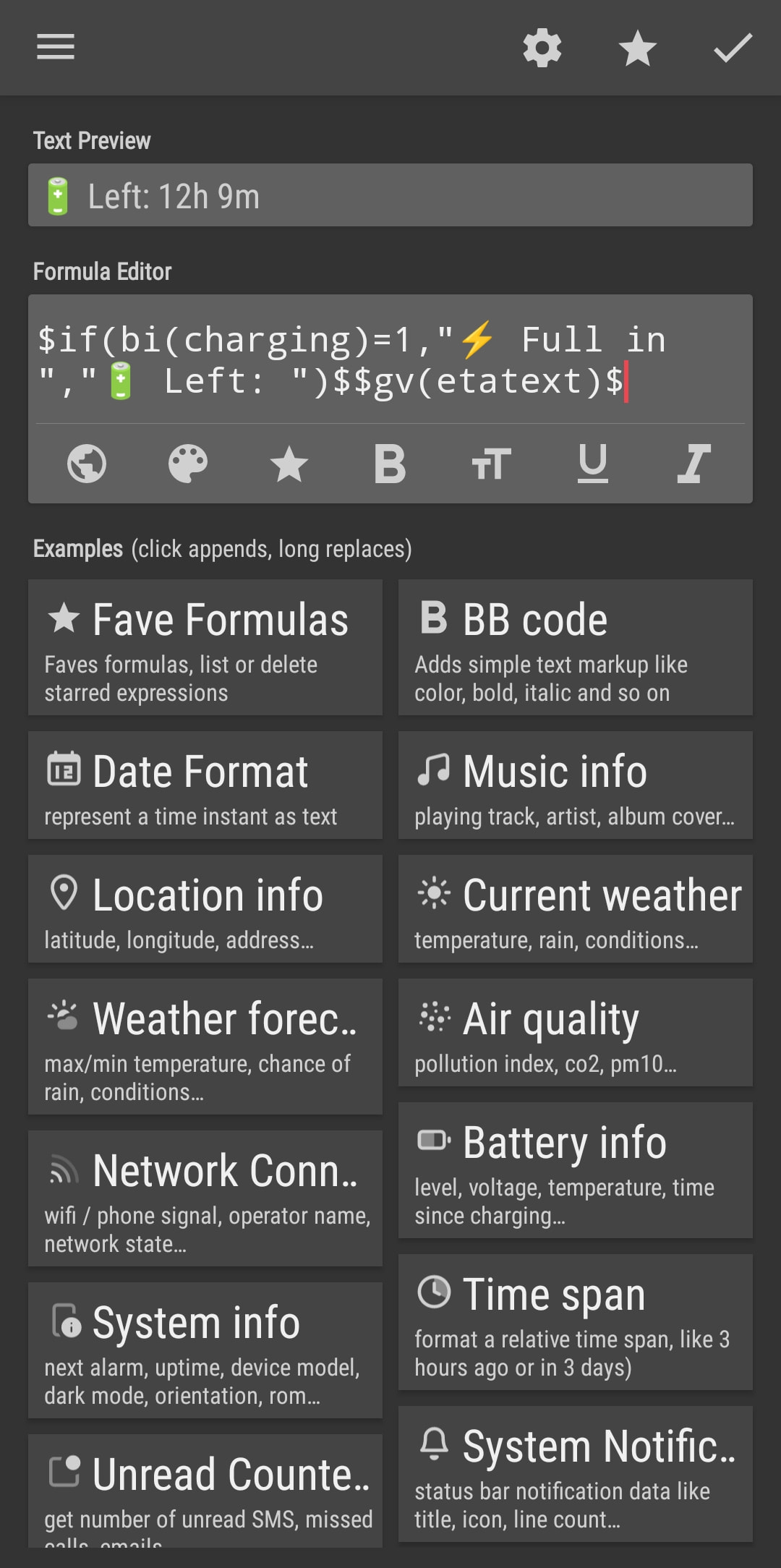
$if(bi(charging)=1, "⚡️ Full in ", "🔋 Left: ")$$gv(etatext)$
Notes
CALIBRATION
- Charging Rate (
cr): Charge from a % level (example: 40%) for 10 minutes, then note the % increment. Then setcr = 10 / increment - Discharging Rate (
dr): monitor the discharging at a % level (example: 60%) for an hour of normal use, then more the % decrement. Then setdr = 60 / decrement
The above Calibration are needed for a more accurate measurement, and they may be different from a phone model to the others and the charging power (example: 18W, 25W, 33W, etc.)
I hope this would help.

